.png)
Search Results
Search this site
218 results found with an empty search
- Nature (Digital Version) Review
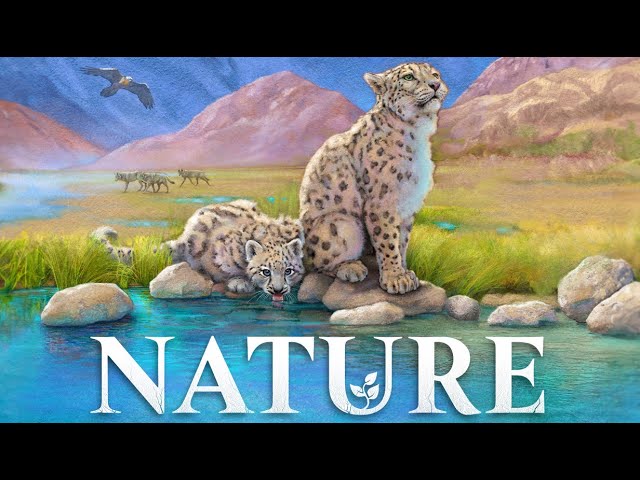
Nature is the spiritual successor to North Star Games’ award-winning Evolution . A deceivingly simple game focused on survival of the fittest, Nature is interesting in that North Star Digital Games (the digital branch of board game maker North Star Games) developed Nature in tandem with the physical board game, realizing that the best way to playtest and balance the game would be to create a digital version. Letting the computer play itself as fast as possible quickly revealed which cards and playstyles needed changes to better align with their vision. This evolution mirrors the gauntlet the player will have to endure to survive all challengers at the watering hole. With linear challenges, multiplayer, and even competitive online options, players have a choice how challenging survival will be. Publisher: North Star Games, North Star Digital Games Developer: North Star Digital Games Platform: Played on PC Availability: Released November 5, 2025 on Windows PC (Steam), Android, and iOS. The basic flow of the game is simple enough. Players (1-4) crowd around the watering hole and create a strategy by taking control of a species to ensure their survival. Each player must decide how to distribute attribute cards, such as making species stronger, faster, more efficient, or more opportunistic. After assessing dealt cards, the real depth comes into play. Cards can be used to increase a species’ population number or size. Raising a species' population increases how much food they eat from the dwindling center pile, with food tokens tallied for points at the end of each round. Although this is the fastest way to win, going after points alone will leave a species weak and easily preyed upon. Leaving cards for the next phase is also an option. Next players take turns eating resources, and any remaining or unused cards can be traded for an amount of food indicated by a number in the corner of each card, which is then added into the shared pile. If competition is fierce, this could be a viable strategy to ensure some food is available for something to eat later in the rotation. Any species with un-fed numbers will have those members starve and be subtracted from the total. Only fed members of a species will count for points at the end of the round, making survival of your population your top priority in all aspects. However, there is one more option, one more source of food — another species. If opposing species eat all the food or are too weak to fight off an attack, becoming a predator could be an easy way to deny points while increasing your own. As long as there are viable prey, becoming a predator is an enticing strategy. When predators find themselves hungry without prey to feed upon, cannibalism is always an option. The player that survives this delicate dance and reaches the end with the most food eaten, wins. It's almost shocking how much the artwork clashes stylistically. Each individual challenge (level) is arranged linearly in a route for each island representing the main game and each expansion. Repetition is surprisingly rare as each challenge has either a different number of players, a unique AI, or an additional set of unusual rules. By having a simple, easy to understand spot for each species, the UI is clear, helping the player digest the large amount of information the game displays while understanding what options are available each turn. With a potential of 20 individual species between four players, this is great for lowering turn times and helping players pick up on what is happening with each species each turn. Art and graphics look great for the cards and play areas, utilizing a blend of realism and stylization to create a striking image. Unfortunately, this strongly clashes with the simplistic characters, menus, and maps. This is relatively minor, however, and has little to no negative effect on individual match gameplay. Nature strikes a great balance between a low skill floor and a high skill ceiling, offering room for flexible strategy when needed as cards introduce RNG, forcing players to adapt their strategy with whatever hand they are dealt each turn. With many challenges to conquer, players have plenty of content to experience before having to resort to attempting to 3 star challenges. Grab a shady hat and a walking stick and get ready to venture out into Nature . Will you survive? Verdict Nature is a solid card game focused on strategy and resource management. Each card having 4 different options of play makes this game stand out for its simple complexity. Varying challenges in single-player mode keep the game fresh by forcing new strategies. Cards are well drawn and add to the overall natural theme. The positives stop, for better or worse, when clicking through the less appealing menus and single-player map. I do hope these are redone in the future to strengthen the overall theme and continue the passion that shines through in every other aspect of this game. Image Credits: North Star Digital Games Disclosure: We received a free review copy of this product from the publisher.
- Vampyr Review
Does it suck to suck? It feels like forever since I’ve played a good vampire RPG — maybe I never have at all. While there are numerous successful translations of the subject material into other game formats, such as visual novels, something about the portrayal in RPGs has never quite clicked for me. Political intrigue and thematically relevant stories are abundant, but actually playing as a vampire is rarely satisfying in a way that feels novel or unique. Oftentimes the vampire aspect is downplayed in combat scenarios, serving as little more than a garnish onto your bog-standard FPS or third-person action gameplay. The standard for many over the last 20 years has been 2004’s Vampire: The Masquerade – Bloodlines , a game that remains so broken that it requires fan patches to even render it playable — not exactly an enticing offering. Even that game struggles to make vampirism interesting mechanically, as most of the fun comes from the role-playing and social contract aspects of the world. Enter Vampyr , perhaps the first and last of its kind. A game that not only utilizes its interesting world and characters to craft a dark and enthralling atmosphere, but also is sometimes fun to play. Publisher: Don't Nod Entertainment Developer: Focus Home Interactive Platform: Played on PC Availability: Released June 5, 2018 on Windows PC (Steam), PS4, and Xbox One. Released on October 29, 2019 for Nintendo Switch. The start of Vampyr sees Jonathan, our protagonist, turned into a vampire and taking a life before he even understands what has happened to him. As a doctor, his oath to do no harm has been broken; as a vampire, his lust for blood puts him on the run. But even as a vampire, the man Jonathan Reid remains, caring and compassionate despite his woes — if you let him be. The struggle to consume people is ever present narratively and mechanically, as devouring NPCs grants an enormous amount of experience, setting up Vampyr ’s most interesting dynamic of first getting to know the citizens and assisting them before being able to or willing to consume their flesh. The predator and prey dynamic is a familiar one to many, as it is a recurring theme in games about vampirism and especially so in Vampire: the Masquerade titles. Of course, the spectre of Vampire: The Masquerade – Bloodlines still hangs in the shadows through it all. Vampyr takes great inspiration from it and the World of Darkness at-large, even using Vampire: the Masquerade series-adjacent terminology such as “Antediluvian” intermittently throughout. Despite this, Vampyr manages to craft its own world and story, set in post-World War 1 London, full of political maneuvering, threats mystical and mundane, and gloom. That setting is perhaps its most unique attribute, with London itself feeling lived-in, despite the horrors taking place around you. Tight, rain-soaked alleys are contrasted with the lush parks, grimy sewers juxtaposed against the gauche manses of the more affluent members of society, all accompanied by the strings and melancholy of the score. London is a city where people live, not just a playground for your vampirism, and right now things aren’t great! The precarious situation in London is central to the gameplay in more ways than one. As you explore, you come to meet the citizens, all of whom are struggling with life under the “disease” afflicting their communities. As mentioned before, you need to resolve their woes to make them more enticing targets by increasing the exp they grant you upon consuming them. Vampyr takes this a step further by tying the citizen’s well-being to the city itself. Every person contributes to the health of the district in which they live. Keeping the citizens happy and healthy through quest completion, curing them of diseases, and (most importantly) alive means districts remain stable. Stable districts mean fewer powerful enemies on the streets, and more quests to complete. It’s a delicate balance of decision-making — do you feed in order to gain power, or abstain to save lives? The precarious situation in London is central to the gameplay in more ways than one. As you explore, you come to meet the citizens, all of whom are struggling with life under the “disease” afflicting their communities. This dynamic comes to a head most prominently in combat and conversations. If you abstain from feeding entirely, as I did, you’ll be severely underleveled for many of the game’s encounters, requiring more precision in battle to advance. You’ll also miss out on some weapons or crafting materials, though these are mostly inconsequential aside from achievements. Perhaps expectedly, your feeding habits are also commented on by the characters who will acknowledge your restraint (or lack thereof), as well as modifying the ending you receive. Those conversations and their depth are where the game truly shines. Each conversation is like a puzzle where you piece together bits of information received for collectibles, other characters and the current subject to open up new bits of dialogue. Occasionally, you’ll be presented with a “Y” choice that becomes consequential. Pick the right option and you’ll learn new hints, but pick the wrong one and you might be locked out of hints for multiple people and all of the experience that comes with it. The game doesn’t tell you what the “right” answers are, though. Instead, your best course of action is to piece together your conversant’s personality through your prior dialogue and gathered information, which can then be used to make an informed guess. You can always just pick what you want, too, as these choices don’t materially affect gameplay or story outcomes in most cases. In fact, many choices don’t give hints at all, but rather shape the tone and tenor of the conversation, forming the backbone of the dialogue system. This grounded approach was such a relief to me. Rather than focus on outcomes or rewards, I felt more free to roleplay and really dive into the text itself and explore Jonathan’s character. Free to really dive into that conflict between his inner selves: the man of science and compassion versus the mystical beast of rage and lust. Even if you did regret a choice, you wouldn’t be able to change it, as the game uses a single save file for each playthrough. There are no manual saves, Vampyr relies on an auto-save only system that regularly updates as you explore or gather materials. Better get used to living with the consequences of your actions, as well as the follies of the game itself. I was quite fond of this save system in some ways, as it took the pressure off of making a perfect run happen. I could just play as I wanted. Whatever will be, will be. At least, until a major sidequest completely bugged out, rendering me unable to finish it and any associated character interactions. This bugged quest not only prevented me from getting hints for some characters, but locked me out of other goodies related to achievements. I spent an inordinate amount of time trying to correct or resolve the issue in some way, but the only reward for me was that I became more comfortable with letting go. Vampyr is dark and dreary, yet full of life. As far as combat goes, it’s a mostly-shallow third person action game with limited abilities and minimal strategy, but it does succeed quite well at making Jonathan feel like a real vampire. The slow movement comes off as a bit ominous as you approach an enemy, and the animations are weighty and impactful. Each fight is a freakish dance of blood and claws and fangs that only ends when you or your enemies lie dead in the ditches of London. I played up my vampiric aspects in my build and combat approach, focusing on spending blood to sling abilities around only to stun enemies so I may feed on them for additional resources to do it all again. The brutality of the bite was probably my favorite aspect of the combat. The camera draws in closer to you and your victim as they struggle against you, and the animations and sound effects really sell just how vicious this whole ordeal is. Which is probably why the disconnect between story Jonathan and battle Jonathan feels so awkward. In the streets, I was cruel and hungry, feeding off of each and every person I could sink my teeth into, but in conversation, Jonathan was adamant he would never feed on a human, keeping his soft and kind demeanor throughout the story’s events. I do understand that this is not something the game was designed around fully. Not being able to feel in battle would be massively restricting, so why punish you for utilizing the game’s core combat mechanics. That seems like solid reasoning until you enter a fight midway through the game and consumption does, in fact, count as feeding on a person for story purposes. I think the game could have really benefited from going all in on this choice in combat, offering better options outside of blood use and feeding for those who didn’t wish to partake. Instead it creates this dissonant structure of two separate experiences, only to flip that on its head in one single encounter part way through. Each fight is a freakish dance of blood and claws and fangs that only ends when you or your enemies lie dead in the ditches of London. Unfortunately, there’s a disconnect in the story dialogues as well, scene-to-scene. A majority of the time, Jonathan’s actions and demeanor are predicated upon your own choices. Whether it’s the actions you took prior to any given scenario, or the explicit “Y” choice you’ve made in a given dialogue, something you have done is informing the way each conversation moves. So when major plot points force you into specific scenarios that are incongruous with the character that you have helped shape, it leaves a bitter taste. This is exemplified best in the romance subplot throughout the game. Early on it does clue you into a bit of flirtation, but midway through the game it turns into a jarring and forced aspect that feels really awkward not to have any say in. Ultimately, where I land on Vampyr is a bit muddied, as well. While I love the way the conversations and city maintenance aspects intertwine to make London feel lived in and consequential, I’m much more ambivalent toward some story beats and the combat. It absolutely satisfies that itch of playing as a true bloodsucker, but stumbles when trying to guide players from plot point to plot point. Combine these deficiencies with the bugs and somewhat repetitive world navigation, and you’ve really dampened what could have been an electrifying experience. Verdict Vampyr succeeds when it focuses on its cast of complex and interesting characters. There’s a great symbiosis between those characters and the world they live in that drives the game forward at all times. By focusing on the interplay between those characters, their stories, and their community, Vampyr forces you to sit with your choices. While it is ultimately dragged down by its bog-standard combat and disappointing story beats, Vampyr still stands as a great take on the Vampire RPG. It might even be the best we’ve seen yet. Image Credits: Focus Home Interactive and Dontnod Entertainment
- Top 14 Steam Next Fest October 2025 Demos
What's Next? This October’s Steam Next Fest has finally come to a close. With hundreds of demos available to try out, I was never going to be able to get through them all, or even talk about a fraction of the ones I played. That doesn’t mean I can’t talk about the ones that made an impression, however! Here are my top 14 demos from October 2025’s Steam Next Fest: Skate Story What if Skate and Lumines had a baby? That’s the design philosophy seemingly behind this upcoming exciting skating title. The story follows a demon made of glass who has been given a skateboard. Your objective: skate to the moon and eat it. Somehow more "out there" than the premise suggests, this one is full of good tricks and great vibes. Ember and Blade Taking cues from titles like Vampire Survivors and Hades , Ember and Blade is an enticing mix of action and story. You battle hordes of enemies, collecting power along the way as you aim to fight a larger demon boss at the end of each zone. The art direction and story are pretty interesting from what little we saw in the demo, so here’s hoping the full release is just as interesting throughout. MARVEL Cosmic Invasion Another arcade beat-em-up brought to you by the team behind the tubular Teenage Mutant Ninja Turtles: Shredder’s Revenge , this one sees you control teams of Marvel super heroes prowling the streets to beat up some bad guys. Reminiscent of classic arcade titles like Streets of Rage , MARVEL Cosmic Invasion can be played with up to 3 other players. Hell Maiden Another bullet heaven and roguelite mix to make the list, Hell Maiden uses its 90’s anime aesthetic to tell a tale of Dante and Vergil (of Divine Comedy fame), but if they were young girls traveling through the hells themselves. While most of the game is rendered in a charming pixel-art style, there are special moves that wowed us with their presentation by featuring fully animated cutscenes in the midst of gameplay. Dead Format Dead Format is a survival horror game set in 1990s Scotland. The premise is simple: your brother has gone missing after becoming obsessed with a mysterious new VHS format. The player character must piece together and follow his trail through the tapes and uncover why the government wants to ban "Video Ghastlies". The atmosphere of Dead Format is top-notch. The videos have a The Ring -like quality to them, and the areas each VHS tape generates captures the feel of the videos perfectly. Yunyun Syndrome!? Rhythm Psychosis A rhythm adventure game about a hikikomori girl - also an avid anonymous poster - who corrupts the world while listening to denpa songs. The art is phenomenal, and the rhythm game portion is exciting as well. Helps that the music is straight gas, too. Cairn A rock-climbing simulation game, Cairn sees you scaling mountains as professional climber Aava. Using Aava’s stamina and posture as your resources, you must take hold of the terrain and climb as high as you can. Homura Hime One part bullet hell, and two parts character action game, Homura Hime has style in spades. Bladesong An impressively deep sword-making game with some interesting RPG elements mixed in. The crafting in this game is insane, frankly, and the amount of freedom you’re given to shape and design your blades lends itself to some truly goofy creations. Lumines Arise Speaking of Lumines, Lumines Arise is coming out soon and if the demo is any indication, we’ll be talking about it for a long, long time. This rhythm and puzzle game fusion is deserving of every bit of hype it has been getting. Anthem#9 Anthem#9 features similar artstyle and music to Atlus’ Persona titles, but don’t let that give you pause — this title is its own unique thing. Using gems to craft your next move, you’ll have to battle through a series of stages before facing each boss. Rubinite A 2D pixel style boss rush game. The Demo has given us a taste of the combat, and a glimpse into the dark world this story takes place within, and I can’t wait to play more. Alabaster Dawn From CrossCode developer Radical Fish Games, Alabaster Dawn is a 2.5D action RPG brimming with charm. You’ll fight bosses, solve puzzles, and explore a finely crafted, lush world in this adventure. Wizard Cats In Wizard Cats you play as — you guessed it — a wizard cat. A silly premise, for sure, but this is an impossibly deep game full of spellcraft and danger. Using a nearly endless number of spells, you must sling your way through hordes of enemies and duel other spellcasters. And that’s the list! I played over 40 demos during Steam Next Fest, and while these were not the only good titles I tried, they were the ones that stood out to me the most. I can’t wait to play these upon full release. If you’re interested, take the time to try out some excellent demos in the meantime!
- CARIMARA: Beneath the forlorn limbs Review
The moment I set my eyes on the trailer for CARIMARA: Beneath the forlorn limbs , I knew I had to play it. Using a sort of first-gen Playstation aesthetic to fill out its world, CARIMARA: Beneath the forlorn limbs cuts a densely detailed slice full of dread and unease. Low-poly models and a muted color palette are not necessarily unique visual choices, but it’s easy to see at a glance that there has been a lot of care put into this vignette. What is quite unique, however, is its handling of its most basic gameplay elements. Publisher: CRITICAL REFLEX Developer: Bastinus Rex Platform: Played on PC Availability: Released Oct 6, 2025 on Steam. Playing as a little goblin-like figure known as a Carimara, you’ve been tasked with solving the mystery of a haunting by an old woman in the woods. A seemingly malevolent spirit has taken hold within her basement, and your task is to remove it from the premises and figure out why the spirit persists. There’s such a pervasive sense of unease throughout the opening moments, it becomes off-putting. The crone in the house that hired you is constantly shifting her tone and body language into a more threatening demeanor, and the darkness of the space makes it feel claustrophobic in a way. Your small size makes this a small wonder. How does that lady move around here comfortably? That first conversation also sets the stakes for your character. The client and other characters are quick to point out that your life is at stake, so care should be taken. This is not actually true, however. There are no true existential threats to be had. There are no traps to fall into, and no enemies to battle. You’re not here to fight for your life, you’re here to learn. But if the player character cannot actually speak, how are we meant to communicate and discover? Here’s where the cards come in. These little tools are acquired by examining glowing objects or people, and can be used to communicate or interact with things in the world. A Key card could be used to unlock a door, or a card depicting a statue could lead to the lady in the house doling out some more pertinent information. You’ll need to use the correct cards on the right people to make sure you get all of the information you need to set things right. All the visuals have an unnerving feel to them. Unfortunately, the entirety of the game can be completed in only a few minutes. Even with testing every interaction I could think of with characters and rooms, I never crossed past the hour time mark. You could quite literally bumble your way through, if you wanted — there are no negative effects or long-term consequences for getting something wrong. Instead, the game relies more on its art and sound to manifest those disquieting feelings. The low-poly models and ever-shifting textures make everything feel ever so slightly stilted. Sparring use of color splashes demark important areas or help set the scene in other ways. All of this is detailed and hand-crafted, with each and every object set for a specific purpose, whether that’s practical use or environmental storytelling. The things you can transform into cards are a bit of an exception in this regard. They are so obvious and bright that they feel out of place until you examine them. All of these elements serve to create a short but dense experience that is just waiting for people to explore. Despite that density, it does feel like something is missing. An extra layer of mystery that could liven up the brief time we spend here, or another scenario to work through to flesh out the card mechanics and introduce additional intrigue — these are the types of things I found myself longing for as the credits rolled. I see the vision. Just wish it had been grasped a bit tighter. Verdict CARIMARA: Beneath the forlorn limbs ’ greatest detriments are that aforementioned length and lack of depth. It has a really great core concept, and an excellent atmosphere, but it feels more like the beginning of an adventure rather than a complete tale. With a few more mysteries to solve through exploration and utilizing the card mechanic, I can envision a game that would stick around in collective memory as one of the more unique and interesting horror games on the market. As it stands, CARIMARA: Beneath the forlorn limbs is more like a dream — an assortment of interesting, but half-formed ideas that will likely fade away in short order. Image Credits: Bastinus Rex and Critical Reflex
- Vampire: The Masquerade - Shadows of New York Review
Vampire: The Masquerade - Shadows of New York is the 2020 sequel to 2019’s Vampire: The Masquerade – Coteries of New York , and shares a lot of similarities — art styles, gameplay, characters, and music. Even the basic premise remains very similar at the outset, with the main character, Julia, being newly minted as a bloodsucker. As I played through Vampire: The Masquerade - Shadows of New York I was certain that I would not be reviewing it. I am just coming off of having reviewed its precedent work, and reviewing the games in such quick order felt a bit like retreading ground. Something changed for me as I neared the end of the game, however. Publisher: Dear Villagers Developer: Draw Distance Platform: Played on PC Availability: Released September 10, 2020 on Steam. Beyond the opening embrace, the plot of the game follows Julia Sowinski who has been tasked to investigate a murder under the tutelage of sheriff Qadir al-Asmai. Qadir is not the only returning character for Vampire: The Masquerade - Shadows of New York , as many important characters from the first entry make their return as part of this tale. For all of its similarities to the previous entry , Vampire: The Masquerade - Shadows of New York comes as an obvious improvement in some notable ways. The most pressing change seems to be just how much your choices matter. While it is perhaps not the most reactive game ever made, even the small ways in which you can shape events and the character of Julia are a significant improvement over the previous entry, which saw the player have little to no impact on the player character’s personality or the events of the story. Your choices not only affect the specific outcome or flow of each encounter, but also grant the player traits as the game advances which will affect some of Julia’s automatic dialogue and inform her reaction to the things happening around her. As she comes to terms with the ever-shifting kindred political landscape, she is also coming to terms with herself, learning more about who she is as a protégé , as a lover, and as a person. What hasn’t changed when compared to the first entry, as mentioned earlier, is the game’s art style. This is a double-edged sword for several reasons. First, the consistency does make this feel like a true sequel or sister game to Vampire: The Masquerade – Coteries of New York . The artwork and aesthetic remains gorgeous, with those painted portraits and backgrounds remaining a standout feature of the game. However, many assets are reused from the first title, such as a large number of locations and character portraits. With there being a few years between the two titles (in-game, at least), you would expect some change, at least. Hell, even an outfit change would benefit some of the cast. That said, the new portraits and locations fit right in, forming a cohesive work in this regard. The “play” element remains almost entirely the same as the first entry, as well. At night, you can look at the city map and make your way through one or two events of your choosing. These minor events give you an opportunity to flesh out Julia’s character, learn a bit about the world, and meet new and interesting characters. Make your choices in the interaction, see how it plays out, and move onto the next scene until you’re forced into a main story moment. It’s a solid loop, and since you can’t see all of the events in a single playthrough, it adds a bit of replayability to the title that would otherwise be missing due to the lack of impactful choice. There are some things that prevent this title from being a great game, overall. While it is an improvement over its precedent work in terms of choices and their effects, those moments are still quite sparse. Although I can see why they would continue this design philosophy from Vampire: The Masquerade – Coteries of New York, what with the player being a simple fledgling in way over her head, it does come across as underwhelming as a visual novel. Even negative encounters would be welcome should you say the wrong thing. Instead, Vampire: The Masquerade - Shadows of New York seems content to let Julia (and by extension the player) float through the game undeterred until the final moments. Should we accept that this is simply a set story with minimal interaction, we must find our joy and meaning in-between the “major” choices. The moments where you get to roleplay really matter. In the face of an uncaring and immutable world, at least you get to be you, game be damned. The final moments of the game flip that idea on its head, however. Should we accept that this is simply a set story with minimal interaction, we must find our joy and meaning in-between the “major” choices. I sincerely take umbrage with the categorization of the two different endings as either “good” or “bad”. It simply betrays everything that the game does in practice. Your decisions throughout guide your character arc and the entire experience within the game, and to boil it down to “good” or “bad” is frankly baffling. This is especially true when you actually view the endings and realize that there is no such distinction. They are just different endings. They accomplish very different things, and whether or not one might be a bad ending would entirely depend on the player’s motivations or goals. Putting a stamp on one or the other as the “correct” outcome in the closing moments is narrative malpractice — and it doesn't even happen within the game! These are the achievements! This nomenclature speaks to a larger problem across not only visual novels, but gaming as a medium. So often in RPGS or games where the “choices matter” players are looking for the best result, trying to win. What collection of choices gives you the optimal ending, which ones give you the highest reward, or which ones present you with the most content — turning the game and its roleplaying into a series of boxes to check, rather than an experience to be had. By codifying these endings into “good” or “bad”, the developers have all but conceded that there is a right way and a wrong way to play the game. I understand that for many, this is a minor thing in the grand scheme of it all. If it doesn’t change the actual game, what could it possibly matter? For me, it matters a great deal. It reveals the design philosophy of the entire game, and boils it down to a win or lose scenario. I spent every moment up until the ending feeling content with my choices and the path taken, yet I was now forced to reckon with an invisible scoreboard. Every prior moment takes shape as a box to be checked retroactively. Strong moments of writing and characterization wasted. Verdict The totality of my opinion on Vampire: The Masquerade - Shadows of New York is a bit muddied. Strong writing and characterization, phenomenal art, and appropriately moody music are huge boons for the game. However, its lack of choice and similarity to the previous title, combined with the endings being codified as “good” and “bad”, sour the experience.
- Dead Format Demo Impressions
We should have learned a lesson about haunted VHS tapes by now. What is Dead Format? Publisher: Oro Interactive Developer: Katanalevy Platform: Played on PC Availability: Q4 2025 Dead Format is a survival horror game set in 1990s Scotland. The premise is simple: your brother has gone missing after becoming obsessed with a mysterious new VHS format. The player character must piece together and follow his trail through the tapes and uncover why the government wants to ban "Video Ghastlies". The demo starts you out in an apartment, which serves as the hub for this horror romp. Within this space you’ll be able to review clues, watch the VHS tapes you find, and just generally get a breather from the horrors that roam. Using the VHS tapes you come across, you’ll enter disturbing worlds inspired by Silent Era Cinema, Italian Giallo films, 80s Body Horror, Found Footage and more. Our Impressions The atmosphere of Dead Format is top-notch. The videos have a The Ring -like quality to them, and the areas each VHS tape generates captures the feel of the videos perfectly. There are only two tapes to play through in the demo, but each is distinct in the threats you face and the aesthetic they adhere to. The graveyard/catacombs area is spooky, shrouded in fog that hides the gothic architecture in a black-and-white chromatic landscape, while the other feature is much more grimy, grotesque, and alien. Sound design in these areas is also excellent, using both ambient noise and creatures to really set that sense of dread. On the graphical side of things, I think the game looks great, and the shifting aesthetic really impressed me. There were some serious performance hitches throughout that I hope get addressed, though. I ran into some stuttering and outright freezes a few times while playing. Those hitches can sometimes cause inputs to be lost if they directly coincide. Overall, the game looks phenomenal, and my only regret is that I don’t like the horror genre enough to fully appreciate everything that it’s doing. Dead Format is set to release later this year.
- Eclipsium Mini-Review
The art and imagery of Eclipsium are certainly evocative, with large grotesque figures and body horror elements abound. The environments are all atmospheric and abstract, and there’s mostly no narrative to speak of. In many ways, I’m not particularly certain this is a horror game at all, as there’s no real sense of urgency or threat to be perceived. Without any enemies, jumpscares, timers, or hazards of any kind, Eclipsium mostly functions as a brisk walk through increasingly interesting and abstract images. I remain a bit bewildered by what I witnessed, unable to fully assign any meaning to the events taking place on the screen. At least it looked cool! Pros Gorgeous pixel art Interesting and evocative imagery Great music Cons High pixelation often leaves environments and objects muddied and hard to discern. Lack of variety in gameplay Other The game has little to no explicit narrative, and all imagery is left for the player to interpret. Publisher: CRITICAL REFLEX Developer: Housefire Platform: Played on PC Availability: Released Sept 19, 2025 on Steam.
- Mars First Logistics Review
“Deliver Donut” – Watch as Greenhouse is built “mission text” Mars First Logistics has been on my radar since 2023. Like many gamers, I keep a long wishlist, currently clocking in over 20 games that looked promising, but are either unfinished or hiding behind early-access paywalls. Some of these gambles pay off, as with Baldur’s Gate 3 , while others feel like perpetual cash grabs ( Star Citizen , looking at you). Fortunately, Mars First Logistics belongs to the Baldur’s Gate 3 camp. It’s one of those rare early-access stories that worked out . Though it’s not a narrative or visual masterpiece, it’s an impressively executed physics-based drone builder and delivery simulator. I’ve spent over 18 hours with the game so far, and while fans of the genre could easily sink a hundred, I’ve played enough to get the gist of it. Publisher: Shape Shop, Outersloth Developer: Shape Shop Platform: Played on PC Availability: Released Sep 25, 2025 on Steam. The Process Accept a mission (pickup and delivery). Plan a route to the pickup. Design a vehicle that can carry the item. Test, redesign, test again. Deliver or start over. You have no idea how many times I’ve had to rewrite this list. Early on, your limited budget and part selection force “creative” problem-solving. Like a drunk, realizing his fingers can no longer open cans, but his keys can punch a hole to drink from. I kept trying to build universal vehicles that could handle multiple missions, but soon realized how specific each job is. Do I build a flatbed with guard rails? Add grabbing arms? Maybe a scorpion-like forklift for flexibility? As I did more deliveries, I unlocked more parts. However, it is difficult to fully imagine a new solution at times. Admittedly, that is a personal issue. A large truck bed lets me dump and run, but “realistic” (as much as a simulated Mars can be) terrain and weight quickly complicates that plan. Actuating arms can help lift items or flip your entire rig (you never think you need to flip a rig, till you do). Sometimes a simple bucket makes things worse. The game is forgiving in clever ways: you only need the whole item inside the delivery zone, so partial transport in multiple trips works fine. But the terrain is brutal. Cliffs, dunes, rock fields sometimes all at once, and you’re occasionally on a timer thanks to a giant melting ice cube as cargo. The developer clearly has a familiarity with automation or robotics; as someone with automation experience myself, the toolset feels intuitive. The problems, however, are ridiculous. That’s what makes it fun. At first, it is simple: grab the thing. Then grab the heavy big thing. Then the slippery big thing. Each step makes you question the fundamentals of a solution and soon enough your rebuilding rigs from scratch just to deliver a watering can on the other side of a bumpy hill. Difficulty is far from linear, much like puzzles, it’s how well you grasp the logic. Building and Story You don’t just deliver, you build Mars. Each delivery contributes to constructing facilities as directly building transmitters or monorails. The delivery of a trophy creates a race track; a repair kit spawns a fighting arena. The story and visuals aren’t the selling points, but they serve the tone well. At no point do you have dialog — it is more like dark souls lore, but instead of items, it’s missions. Look at the world and how it changes from your actions. It’s an odd way to tell a story, but interesting. I would recommend watching the above video, to get some idea of how the game feels. The cel-shaded visuals help keep everything clear. Visually, the cel-shaded art style is clean and pleasant. Simple, but effective. The soundtrack stands out most: a blend of lo-fi pop, ambient, and jazzy elevator vibes that kicks in unexpectedly but fits perfectly once you’re cruising over Martian dunes. It actually reminded me of how ConcernedApe (creator of Stardew Valley ) once said that he made games so people would listen to his music. I wouldn’t be surprised if something similar is true here, too. Verdict Mars First Logistics is an outstanding entry in the logistics and “walking simulator” genres, elevated by its robust drone customization system. It’s clever, technical, and genuinely rewarding. With a richer story or more distinctive visual flair, it could have been exceptional. As it stands, it’s already a great introduction to robotics and systems thinking, especially for younger players or anyone curious about how creative problem-solving feels when wrapped in red dust and snappy pop. Image Credits: Shape Shop, Outersloth, and William “MrNoSouls” Edmiston Disclosure: We received a free review copy of this product.
- The Digital Version of Tabletop Game 'Nature' Arrives November 5th
The digital version comes shortly following the release of the physical version. Nature is one of the most highly-anticipated board games of the year, and rightfully so. With vibrant artwork and dynamic gameplay, we had a great time playing it this year at Gen Con. We also got the chance to test out the digital version at the time and came away intrigued. Developed in tandem with the tabletop version, Nature (digital version) will feature all of the elements of the tabletop version right way at release, with additional modules also available at launch. The announcement trailer is a solid representation of what you're getting. What is Nature ? In Nature , players lead their species through a shifting ecosystem where food is scarce and predators lurk. Using card-based strategy, you adapt your species to survive. The game's modular design allows expansions to be added and combined, creating a fresh ecosystem every time you play. Nature offers a full campaign, custom challenges, online matchmaking, and local multiplayer. On top of that, it has two expansions launching day one: Flight , where you find freedom and safety by taking to the skies, and Jurassic , where ferocious predators and colossal dinosaurs roam the land. “We're thrilled to bring the dynamic, vibrant world of Nature alive in Steam,” said Scott Rencher, President of NorthStar Digital Games. “This is our Grail Project. Our team has poured our Evolution experience and four years of relentless testing and tweaking into this adaptation, and we can't wait for players to feel the thrill of trying to keep their species alive in this ever-changing ecosystem.” Key Features Adapt to Survive: Grow your population in a world where resources are limited and danger is never far away. Each game of Nature unfolds in a vibrant ecosystem where species compete to survive. Carnivores stalk their prey while herbivores scramble for every morsel of food. Evolve your Species: Give your species the tools to survive by evolving powerful new traits. Develop the Fast trait to outrun predators, or add Nesting to boost your population growth. With traits that combine and synergize, you can create unique combinations and strategies. Two Modules at Launch: Mix different modules, with each introducing a new theme and new rules. Flight features new ways to find food and the ability to soar away to safety, while Jurassic brings out massive predators vying for dominance. Evolution Legacy: From the designer of the award-winning Evolution , Nature is easier for new players to learn but rewards strategists with complex, emergent gameplay. Nature releases November 5, 2025 on Steam for PC and Mac at a price of $12.99.
- Life Eater Review
Chopped Liver. Strange Scaffold has been on a monumental run over the last few years, releasing great games at a flurry that is difficult to even fathom. With some personal favorites such as I Am Your Beast and Teenage Mutant Ninja Turtles: Tactical Takedown under their belt, I was excited to finally get my hands on the serial-killer simulator Life Eater . Publisher: Strange Scaffold, Frosty Pop Developer: Strange Scaffold Platform: Played on PC Availability: Released Apr 16, 2024 on Steam. That premise is no joke, by the way. The entire concept of Life Eater is that your character hears the call of a malevolent god named Zimforth who tasks Ralph to commit increasingly specific murders. If you fail to complete the task, or mess up the more ritualistic aspects of it, Zimforth will destroy the world. How true that threat is falls under player interpretation, of course. Before you can complete your ritual sacrifice, you must first learn about your target. Zimforth’s criteria change each year, forcing you to find the specific person you are meant to kill through their daily activities. If you need to sacrifice a person who works two jobs, you’ll have to stalk a pool of targets before uncovering which one makes a bit extra on the side. Once you learn enough about a target, you can begin the ritual to “water the flower”. Once that sacrificial menu is pulled up, you’re greeted with an assortment of memory tests that force you to complete pointed tasks based upon your victim’s attributes. For example, you could be given the directive to destroy their liver if they are under 40 years old, or destroy their intestines instead if they are 40 or older. It is an interesting premise that is, unfortunately, marred by its execution. Stalking your victims amounts to very little beyond clicking blank spaces until a differently colored block appears, giving you your answer or additional information. The type of information required for each victim also remains the same: Age, hair color, are they regularly armed, how long do they sleep, do they live alone, do they have kids, and do they commute to work. All of this is readily communicated in the uncovered spaces, so you’ll fall into a simple routine of gathering that information before chopping away at the task at hand. If you fail to get the right person or mess up the ritual, the game simply starts you back at the top of the yearly chapter. As your god calls upon you, you must obey. Of course, there is something to be said about Life Eater making such a grisly task so routine. Everything that you do in service of this god feels detached — mechanically and narratively. The gameplay is little more than clicking through a series of simple menus until you’ve done enough to advance. There’s no difficult strategy or reasoning required, as the time limits are very lenient and your options for uncovering that information are extremely straightforward. As it stands, you can basically use the second discovery option for 90% of the game, using the third only for extremely difficult tasks and using the suspicion blockers to avoid gaining too much notice. From the story perspective, you simply get the call from on-high and begin your work, without any real thought put into examining whether or not Zimforth is real or truly has the power to bring about the end days. At least at first. It is a boon that Life Eater doesn’t shy away from the content of its story, almost normalizing the grisly murders the main character undertakes. Without diving too deeply into the extremely concise story beats, there comes a moment for Ralph to examine if what believes to be true is actually true, but you’re not going to get clear answers on that. It is a boon that Life Eater doesn’t shy away from the content of its story, almost normalizing the grisly murders the main character undertakes. In fact, you don’t get much of anything from the story at all. Life Eater is extremely short, with only 10 main story puzzles, none of which seem to be even tangentially connected. Between these puzzles you get some glimpses into the characters, but even those scenes barely last more than a minute or two. Thankfully, the acting, music, and artwork are superb, so there’s a ton of emotion packed into those brief glimpses. However, the gameplay is not varied enough or interesting enough to really make up for the dearth of narrative content within the title. In many respects, the entirety of Life Eater comes across as a collection of underdeveloped good ideas, each inches away from being something truly gripping. The story doesn’t go far enough with putting you in the killer’s shoes or confronting the depraved nature of the sacrificial endeavors you’re taking part in, and the “stalking” gameplay isn’t quite varied enough to remain interesting or entertaining beyond a few short moments. Had it even fully fleshed out one of these things, I think we’d be talking about this game in a much different way. Verdict Life Eater is a game with great promise. It has a unique and horrific premise that sees you as a serial killer fulfilling the wishes of some demonic god through ritual sacrifice, but never manages to live up to that promise through its gameplay or story elements. In many ways I wish they would have leaned harder into everything from the main character's motivations, to the “stalking” mechanics of the gameplay. A collection of underutilized ideas that gets buried under the monotony of it all.
- Clair Obscur: Expedition 33 to Receive "Thank You" Update
The big update comes with a handful of new content. Clair Obscur: Expedition 33 is not only one of this year's biggest surprises, but also one of this year's best titles . That quality has borne itself out in sales, as well, with Clair Obscur: Expedition 33 having now sold over 5 million copies across all platforms. Sandfall Interactive, the developers behind the title, have been quiet over the last few months, but such a resounding success deserves a bit of noise, doesn't it? Well, according to Sandfall Interactive's own press release , Clair Obscur: Expedition 33 is set to receive a big update as a "thank you" to its players for their continued support. The new content will include: A new, playable environment, taking the characters of Expedition 33 to a brand-new location with new enemy encounters and surprises to discover. Challenging, new boss battles for late-game players to overcome. New costumes for each member of the Expedition, giving even more customization options for players throughout their adventure. New text and UI game localizations into Czech, Ukrainian, Latin American Spanish, Turkish, Vietnamese, Thai, and Indonesian, bringing the total number of supported languages to 19. And more to come… We'll have to wait a bit to see what the "more to come" part of that message entails, but the additions listed here are great for those of us who would love to spend more time in Clair Obscur: Expedition 33 's beautifully crafted world. No release date has been given, but Sandfall Interactive did express some words of gratitude, saying the following: "We spent years working on our dream project, and to know it has resonated with fans around the world in such a powerful way is both wonderful and overwhelming. Now we’re really looking forward to bringing you more of what we're working on! For those who come after. Thank you." About Clair Obscur: Expedition 33 In our review called Clair Obscur: Expedition 33 a breathtakingly beautiful examination of death, grief, loss, and love. Citing its obvious deep respect and reverence for the cultures, people, and video games that came before it. Clair Obscur strikes the balance between pastiche and derivative work.
- Frosthaven Early Access Gets Its First Major Free Update
The latest content will be out for free on October 23, 2025. Frosthaven , the follow-up to 2021's strategy RPG Gloomhaven, will see the release of its first major content update later this month. This latest update, titled Awakening Protocol , comes with a huge amount of new features and content, including new playable characters. Awakening Protocol 's new content: The Unfettered Storyline: Confront the machine uprising, driven by a mysterious and formidable leader. 3 New Playable Heroes: Unlock 3 powerful new heroes and reshape the battlefield with bold new strategies. 5 New Bosses: Battle mechanical and unknown horrors, equipped with challenging abilities. 18+ More Quests: Explore new areas and confront dangerous threats. 1 New Building: Expand your settlement’s capabilities with the Town Hall. 8 Building Upgrades: Enhance and build up Frosthaven even further. 40+ New Items: Discover many new tools, weapons, and gear. Challenges: Tackle unique objectives that offer additional risk and reward. Job Postings: Complete new side quests from the Town Hall and increase your party’s capabilities. This all new storyline sees the player explore the great facility of an ancient civilization that fell into ruin millennia ago. The Unfettered, forged for service and abandoned to rust, now rise with vengeance, driven by an enigmatic leader and a relentless plan. We've had a ton of fun with Frosthaven early access thus far here at JetsonPlaysGames, so additional content and storylines to work though sounds like a great addition to an already great time. One of my largest personal complaints was the lack of playable characters, which can force some awkward decisions for full groups of players. Three additional characters to choose from alleviates that quite a bit, offering more party composition variety so players don't feel as forced into one role or another. What is Frosthaven ? Frosthaven is a dark fantasy strategy RPG, and is the story of a small outpost far to the north of the capital city of White Oak. Set in the same world as the 2021 title Gloomhaven, the people of Frosthaven must contend with harsh weather and ferocious foes in order to survive. Developed by Snapshot Games Inc., Frosthaven (digital version) attempts to convert the complex mechanics and deep world of the tabletop version into a video game format. In our preview for Frosthaven 's early access, Taylor Rioux said " I came away quite impressed with the depth and breadth of what is available to the player within Frosthaven . For an early access title, there are a large number of scenarios and events to engage in, as well as deep, complex mechanics to contend with. It’s too early to speak much on the overarching narrative, but early impressions are strong here, too, as the game is deftly written in the cutscenes and events throughout. If you have played the tabletop version, you’re getting more of the same, but this is a strong recommendation for anyone who enjoys tactical RPGs or tabletop RPGs at home." Image Credits: Snapshot Games Inc .